A filter can look almost new and still be finished. I have pulled month-old filters from humid homes with the pleats already gray and soft, the frames bowing at the corners, and a stale, musty smell on them. The dust was rarely the real culprit. Most of the damage traced back to the water sitting in the air that moved through them.
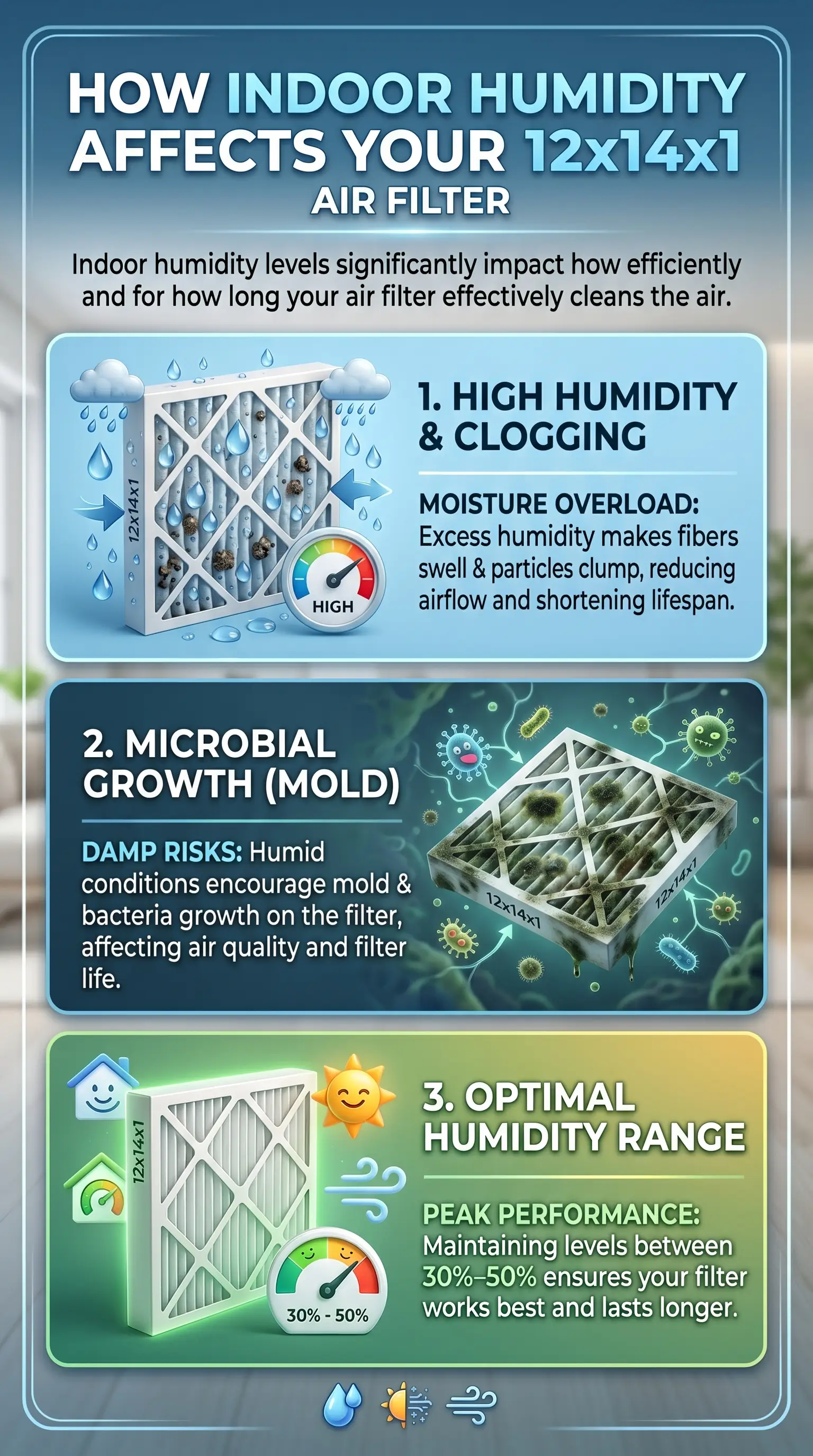
Moisture works on a filter quietly, and most people never connect the two. When indoor air holds more water than it should, the filter feels it before anything else in the house does. It clogs sooner, sags under the load, and in a damp home it turns into the surface mold wants to grow on. Pick the right 12x14x1 air filter for your system and you protect both your equipment and your air, but only if you know how humidity shortens its life and change it on a schedule that matches the conditions instead of the box. An air filter is a simple thing. What surrounds it decides how long it actually works.
TL;DR Quick Answers
- Humidity shortens a 12x14x1 filter’s life by loading it faster and keeping the media damp.
- Aim for indoor humidity between 30 and 50 percent. That range protects the filter and your lungs at the same time.
- Check one-inch filters monthly through cooling season and replace them every six to eight weeks when the air runs heavy, which is easy to keep up if you fold it into a steady maintenance routine.
- A wet, clogged filter makes the blower fight for every bit of airflow and can push moisture onto the coil.
- Soft or gray pleats, a warped frame, or a musty smell near the return all point to the same fix. Reach for a fresh, high-capacity filter.
Top Takeaways
- Humid air carries heavier, stickier particles, so a 12x14x1 filter clogs faster than it would in a dry house. A filter good at trapping more airborne particles earns its place quickly.
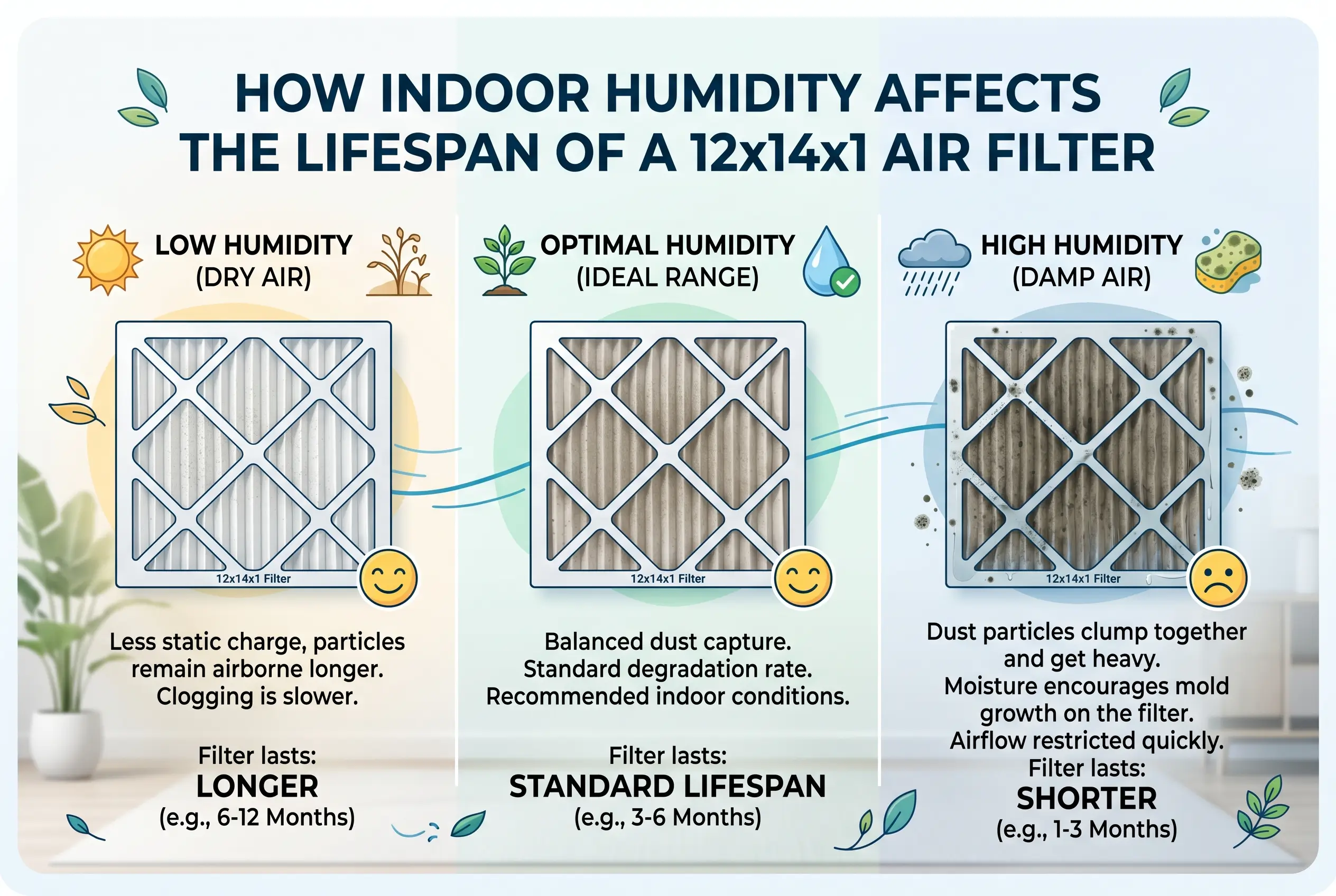
- Past about 60 percent humidity, the media stays damp enough for mold to take hold and for the filter to break down early.
- A wet, clogged filter chokes airflow and makes the blower work overtime, which feeds the strain that shortens system life.
- Higher MERV filters hold more moisture, so I check them more often in humid weather, not less.
- Trust what you see and smell. Gray pleats, a bowed frame, or a musty return mean the filter is spent, and it is time to reach for a fresh filter for cleaner air.
How Humidity Quietly Wears Down Your Filter
Here is what happens to a one-inch filter like the 12x14x1 once the air around it stays damp, and why I treat humidity as its own reason to change a filter early. It helps to know the difference between filter types first, because that shapes how long any of them should last.
Humid air loads the pleats faster
Water vapor does not float around on its own. It grabs onto dust, pollen, and skin cells and makes them heavier and stickier. Push that loaded air through a filter and more of it sticks to the media and stays. In a dry house, a lot of those particles would shake loose or pass through. In a humid one, they pack into the pleats and build a dense mat that strangles airflow weeks early. You can watch how airflow resistance builds up as the load grows. I have measured far higher resistance on filters barely a month old in homes where the air ran heavy all summer.
The humidity range where problems begin
Keep indoor relative humidity between 30 and 50 percent and most homes stay comfortable and mostly clear of moisture trouble. Let it climb past roughly 60 percent and the media never fully dries between cycles. Damp media is exactly what mold and mildew want. A filter is mostly paper and cardboard, and both soak up water fast. Give them enough humidity and enough time, and they start falling apart on their own, long before the dust load alone would call for a change.
What a damp, clogged filter does to your system
A filter heavy with moisture and packed with dust fights the air your blower is trying to move. The motor runs longer, works harder, and pulls more power to force air through that resistance. How added filtration affects airflow shows up fast once the media is wet. Worse, the restriction can drag humid air past the soaked filter and onto the evaporator coil, piling onto the moisture already condensing there. I have tracked more than one musty vent and short-cycling system straight back to a filter that had been quietly drowning for a month.
How your MERV choice interacts with humidity
A higher MERV filter uses denser media that catches finer particles. In most homes that density is a plus, and it also gives the filter more surface to hold moisture and load up. If you are weighing one rating against another, it pays to see how the rating systems compare before you commit. In a humid house I check a higher-rated one-inch filter more often, not less, because it can reach the end of its life right on schedule even when it looks like it should go longer. Match the rating to your home and your climate. That matters far more than picking the biggest number on the shelf.
Signs your filter is spent before the calendar says so
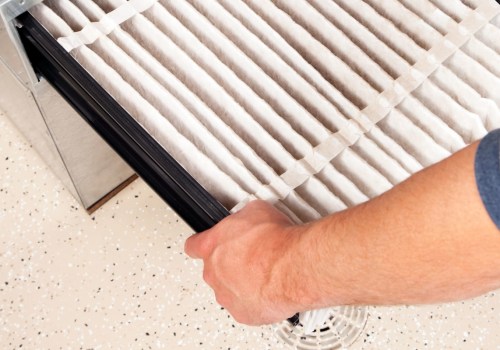
Trust your senses here. Gray or soft pleats, a frame bowed at the corners, a musty smell near the return, or moisture you can see on the media are all signs the filter is done, whatever the package promised. When that shows up mid-summer, some homeowners move to a higher-efficiency upgrade to get more out of every change. A one-inch filter that lasts three months in dry air can be ready to swap in six to eight weeks.
In our testing, the filters that fail early almost never fail from dust alone. Moisture is the hidden partner that breaks the media down from the inside.”
Seven Resources I Keep Coming Back To
When I want to pressure-test my own thinking on moisture, mold, and filter care, these are the independent sources I go back to. Each is worth a few minutes.
- EPA — A Brief Guide to Mold, Moisture and Your Home: plain-language guidance on keeping indoor humidity in check and stopping mold before it starts.
- American Lung Association — Mold: how moisture and mold affect your lungs, with practical steps to reduce both.
- ENERGY STAR — Heat and Cool Efficiently: why a clean filter protects airflow, and how often to check it during heavy-use seasons.
- U.S. Consumer Product Safety Commission — The Inside Story: A Guide to Indoor Air Quality: a broad look at indoor pollutants and the part humidity plays.
- National Institute of Environmental Health Sciences — Indoor Air Quality: the research view on why indoor air, moisture included, matters to your health.
- University of Minnesota Extension — Controlling Moisture Problems in Your Home: a building-science look at where household moisture comes from and how to manage it.
- U.S. Department of Energy — Air Conditioner Maintenance: how filter care and airflow keep your cooling system efficient and protected.
Three Numbers Worth Keeping in Mind
The U.S. Environmental Protection Agency puts the share of time we spend indoors at roughly 90 percent, which is why the air pulling through your filter deserves more attention than it usually gets.
The Centers for Disease Control and Prevention says to hold indoor humidity at 50 percent or lower all day to keep mold from settling in, and that same habit keeps your filter dry between cycles.
The U.S. Department of Energy reports that air conditioners burn about 12 percent of the electricity used in American homes, roughly 29 billion dollars a year, so anything that makes the system strain, a damp and clogging filter included, lands on your bill.
What I Would Do in a Humid Home
If I lived through long, sticky summers, I would stop trusting the calendar on the filter box and start treating humidity as the thing that actually decides when to change it. I would clip an inexpensive humidity meter near the return and hold the house under 50 percent. I would check the one-inch filter every month through cooling season, and in some homes a reusable filter that cuts down on waste makes that habit easier on the wallet. The moment the pleats feel soft or smell musty, I would swap it, even if that lands at every six weeks. None of this costs much. And a dependable pleated filter guards the part of the system that is hardest and priciest to clean. In my experience, the people who watch the moisture spend less over a year, not more, because they head off the big repairs that follow a waterlogged filter nobody checked.
Frequently Asked Questions
Can humidity really ruin an air filter?
It can. Filter media is mostly paper and cardboard, and both drink up moisture. In a humid home the media stays damp, loads with dust faster, and can break down or grow mold well ahead of its usual replacement date.
How often should I change a 12x14x1 filter in a humid house?
I check one-inch filters every month through cooling season. In a dry home they often go about three months. In a humid stretch I swap them every six to eight weeks, as soon as the pleats soften or smell musty. If you are not sure which one fits, start by finding the correct replacement filter for your system.
What indoor humidity level should I aim for?
Between 30 and 50 percent relative humidity keeps most homes comfortable and mold-resistant. A small humidity meter near the return makes it easy to watch.
Should I run a higher MERV filter in summer?
A higher rating catches finer particles, which helps. Just remember the denser media also holds more moisture, so check it more often rather than leaving it in longer, and make sure you are installing it correctly for good airflow.
How do I know if my filter has mold?
Look for dark spotting on the media, a musty smell that lingers near the return, or pleats that feel damp. If any of that turns up, replace the filter and hunt down the moisture feeding it. When the smell sticks around after a fresh filter, a professional system tune-up can find what a filter alone cannot.
Give Your Filter a Fighting Chance Against Humidity
Humidity keeps working on your 12x14x1 air filter whether or not you are paying attention, so a quick monthly look and a sensible replacement habit go a long way. Tap the link above to find the right size and rating for your system and keep your air clean through every humid season.
Learn more about HVAC Care from one of our HVAC solutions branches…
Filterbuy HVAC Solutions - Miami FL - Air Conditioning Service
1300 S Miami Ave Apt 4806 Miami FL 33130
(305) 306-5027
https://maps.app.goo.gl/Ci1vrL596LhvXKU79